Advantage Of EC Fan
When it comes to HVAC (Heating, Ventilation, and Air Conditioning) systems, it’s important to find a fan that is both efficient and reliable. The EC (Electronically Commutated) fan is one of the newest and most popular types of fans on the market, boasting superior performance and lower energy consumption than traditional AC models.
What Is an EC Fan?
An electronically commutated (EC) fan design delivers the combined benefits of AC and DC Fans. The EC fan's power comes from a brushless DC motor, but it offers the control that AC induction fans have over the fan rotor through a printed circuit board.
An AC electrical supply powers the EC fan, but the on-board electronics convert the power to DC before reaching the motor. The secondary magnetic field generated by the permanent magnets makes EC fan motors considerably more efficient than AC induction motors.The fan can also be programmed to spin at different speeds according to the needs of the user.
The cost benefits of installing EC fans
The general consensus among HVAC industry experts is that the use of centrifugal and axial fans with AC motors is coming to an end. As technology continues to improve, systems like this, where the fan accounts for 40-50% of total energy consumption, are becoming obsolete.
Since EC fans offer superior performance along with lower energy consumption when compared to traditional AC fan motors, industry preference for EC fans is self-explanatory. EC systems help customers save money and reduce their overall environmental impact.
Here are some of the advantages ec fan offer:
Increased Efficiency
EC fans use up to 70% less energy than AC-fans, this is because they can produce the same output for less input. With less power consumption necessary to run your HVAC system, the installation of EC fans means reduced energy costs in buildings.
For businesses, cost benefits’ associated with reduced energy consumption are hugely significant. According to the Carbon Trust:
‘A 20% reduction in energy costs represents the same bottom line benefit as a 5% increase in sales.’
With the promise of an improved bottom line, businesses are likely to invest more confidently in HVAC installations and upgrades.
More Control
EC fan motors use multiple methods of control to deliver better efficiency and simplify control of small or large-scale applications. EC fan motors have a printed circuit board that allows precision control through a computer application. Administrators have control of fan speed, torque, and ramp-up time through a central location, and MODBUS-network protocol for scalable automation of fan controls and simplified 0-10V controllers are also available. The advanced control granted to operators allows for optimum efficiency in a variety of applications, making the fan up to 90% more efficient.
Longer Lifespan
Industries and applications that require reliability and longevity can rely on EC fans for a longer lifespan than AC fans with similar capabilities. AC fan motors have carbon brushes that eventually wear out, but the lack of carbon brushes on the EC fan motor eliminates the risk of wear.
Low operating temperatures are another factor of EC motor longevity. Electronically commutated fan motors maintain a lower temperature compared to similar AC fans, decreasing heat-related failure. More reliable operation and a longer service life can offset the higher upfront cost of switching to EC fans by reducing the need for long-term maintenance, repair, and replacement costs.
Reduced maintenance costs
EC fans are a motor, speed controller and impeller built into a single module and do not need belts and pulleys that are associated with more traditional AC induction motor driven fans. This means there is less requirement for maintenance generally.
Reduced noise levels
Unlike AC fans, where noise levels are dependent on voltage frequency; an EC fan operates with minimal noise even at low rotational speeds.
For buildings that have to be sensitive to noise – for example, a library, law court, supermarket, etc – utilising EC fans is particularly beneficial. It not only removes the need to invest in acoustic enclosures but significantly reduces energy costs.
Applications
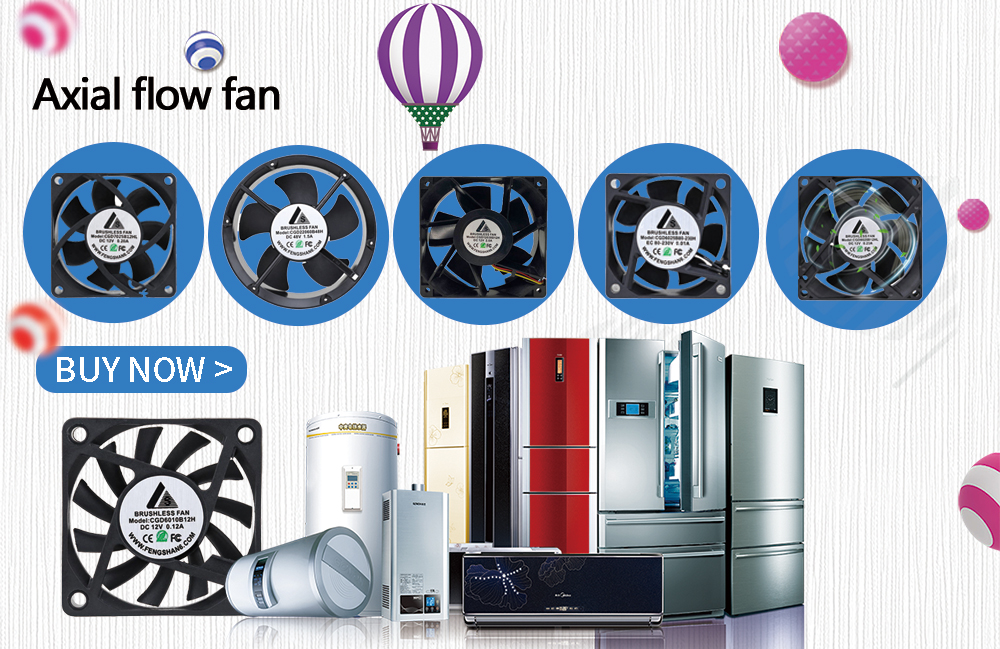
EC fans are ideal for use in major home appliances such as refrigerators, freezers, ovens, range hoods, microwaves, dishwashers, and clothes washer-dryers. Originally used only in high-end appliances, they are now used in high volume/mass-market appliances due to their energy savings advantages (i.e., their higher efficiencies). Additional applications may include air conditioning units, heat pumps, furnace fans, dehumidifiers, beverage vending machines, automatic icemakers, commercial appliances, commercial chillers, duct fans for ventilation, condenser units, and extraction fans for removing smoke and exhaust. However, the biggest uses for motor-driven elements in both the residential and commercial sectors are refrigeration and HVAC (heating, ventilation, and air conditioning).
Where to Buy EC Fans?
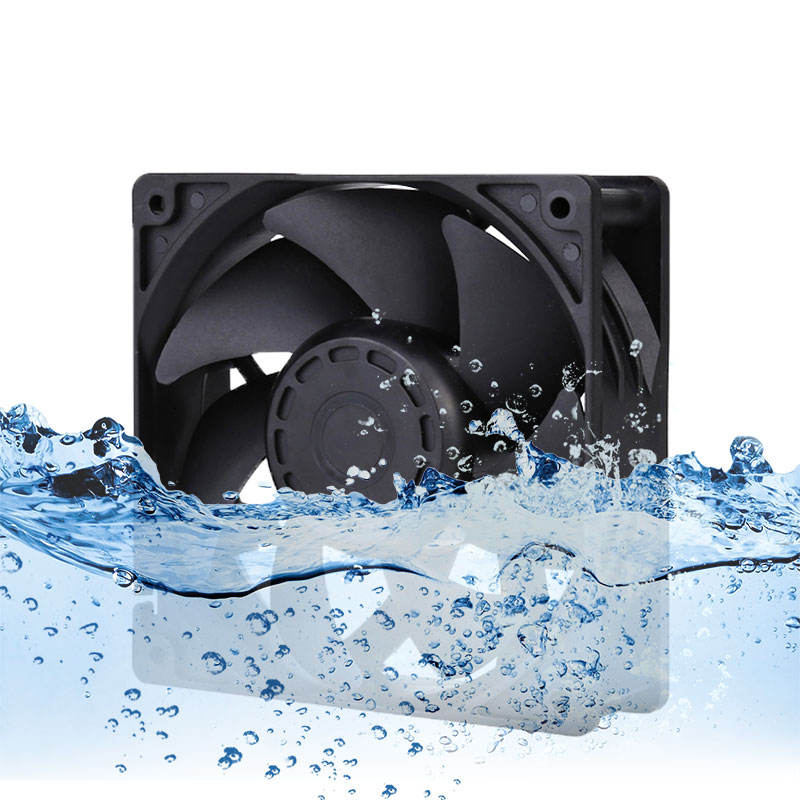
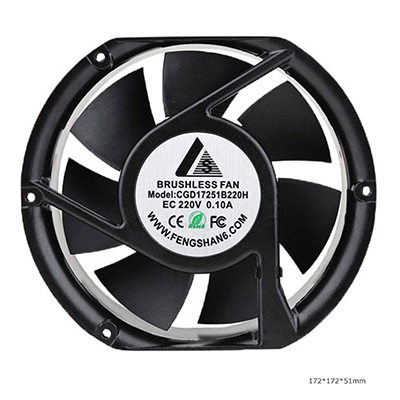
EC Fan Series from CGFans includes 60mm, 120mm, 172mm and 250mm models. Most models are available with a universal voltage range and the 250mm fans are available with dual speed functionality in 115V and 230V versions. Since EC fans eliminate sparking and EMI in brushed motors, the EC Fan Series also includes 60mm, 120mm and 172mm models with IP68-ATEX ratings for applications involving explosive atmospheres or flammable gases.
CG Fan has obtained 13 patents. Visit our website://www.cgdfan.com for more information.
How many types of cooling fans
What is the function of the axial fan filter?