The Types Of Fans
Fans are essential items for scorching summers and humid nights. Their efficient cooling technology is widely applied across various settings, from households and offices to commercial and industrial spaces. Below are different types of fans:
Classification by Airflow Direction & Working Principle
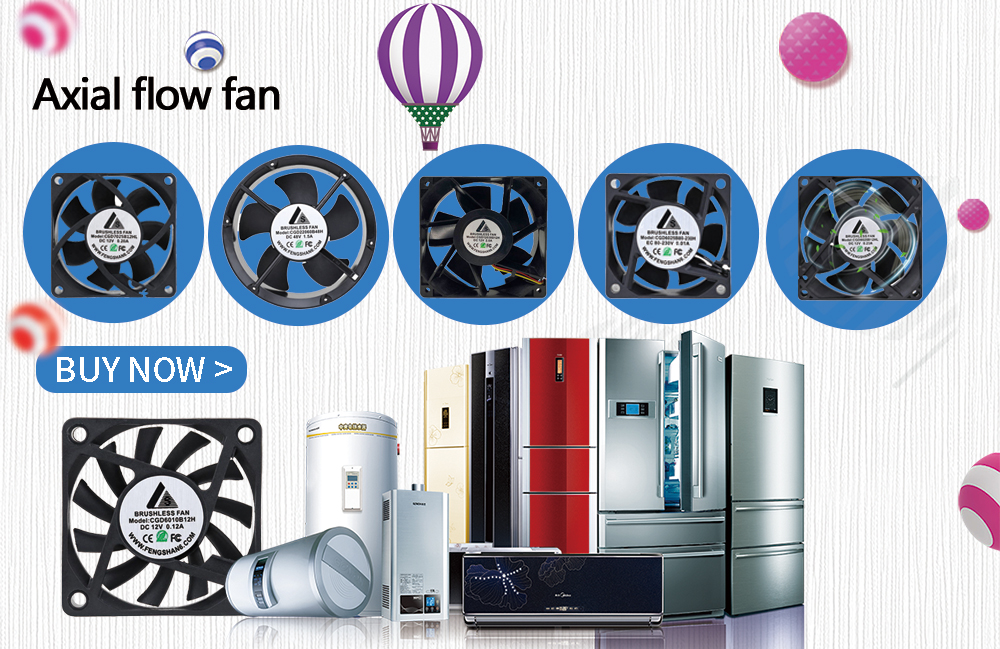
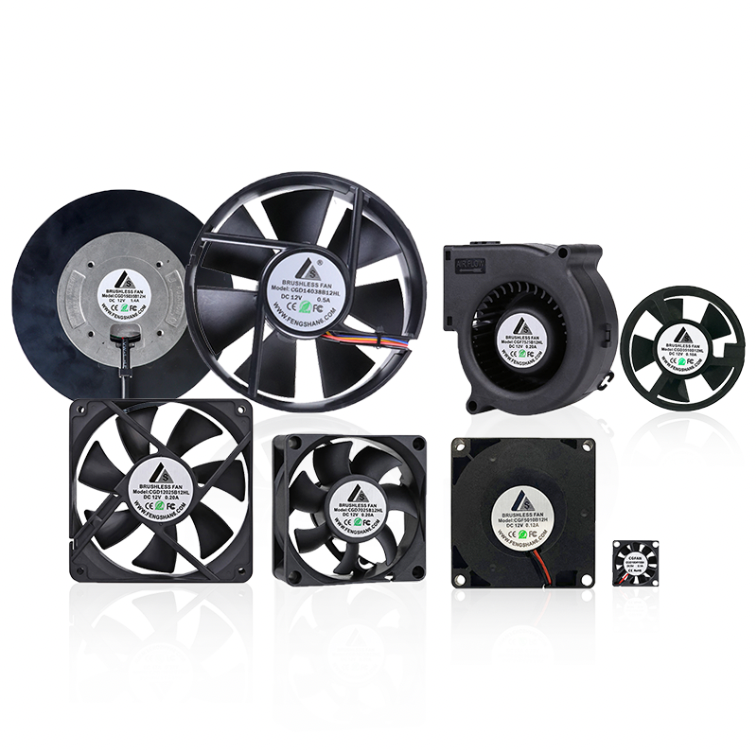
Axial Cooling Fan

- Characteristics: Air flows parallel to the shaft axis, compact structure, high airflow volume, low noise, ideal for large-area ventilation.
- Applications: Household appliances (AC, refrigerators), computer cooling, industrial ventilation.
Advantages: High air volume, low cost, easy installation
Disadvantages: Lower static pressure, struggles with high-resistance environments; noise may affect comfort during direct airflow
Disadvantages: Lower static pressure, struggles with high-resistance environments; noise may affect comfort during direct airflow
Centrifugal Fan (Radial Fan/Blower)

- Characteristics: Air flows radially via centrifugal force from the impeller, high static pressure but lower airflow, suitable for high-resistance scenarios.
- Applications: Industrial exhaust systems, AC outdoor units, automotive engine cooling.
Advantages: High pressure for long ducts/filter systems; stable performance in industrial settings
Disadvantages: Bulky, high energy consumption, less suitable for household use
Disadvantages: Bulky, high energy consumption, less suitable for household use
Mixed Flow Fan

- Characteristics: Combines axial and centrifugal designs; airflow diagonally oriented, moderate pressure and airflow.
- Applications: Large server rooms or buildings requiring balanced ventilation.
Advantages: Balances pressure and airflow efficiently; quieter than axial fans
Disadvantages: Complex design, high maintenance costs
Disadvantages: Complex design, high maintenance costs
Cross Flow Fan

Characteristics: Airflow perpendicular to the shaft; uniform wind distribution, low noise.
Applications: AC indoor units, humidifiers, tower fans.
Applications: AC indoor units, humidifiers, tower fans.
Advantages: Gentle airflow for small spaces; quiet operation
Disadvantages: Limited airflow; difficult to clean internal components
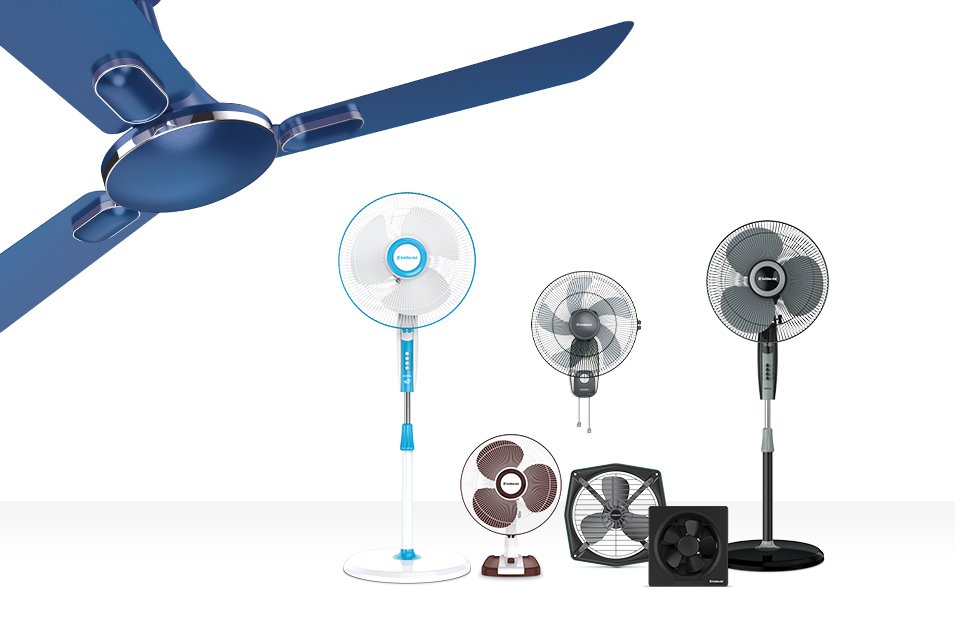
Household Fan Types
Stand Fan

Characteristics: Adjustable height, strong airflow, oscillation/timer functions, suitable for living rooms.
Advantages: Wide coverage, affordable, versatile
Disadvantages: Bulky, harsh direct airflow
Disadvantages: Bulky, harsh direct airflow
Air Circulator

Characteristics: High-speed airflow for room circulation, enhances AC efficiency (8–10m range).
Advantages: Efficient cooling, energy-saving with AC
Disadvantages: Noisy at max speed; expensive
Disadvantages: Noisy at max speed; expensive
Tower Fan

Characteristics: Vertical design, space-saving, gentle airflow for small spaces.
Advantages: Child-safe, uniform airflow
Disadvantages: Weak airflow, hard to clean
Disadvantages: Weak airflow, hard to clean
Bladeless Fan

Characteristics: Turbine-driven airflow, no exposed blades, safe and smooth wind.
Advantages: Safe, easy to clean; natural airflow
Disadvantages: Expensive (e.g., Dyson: ¥2000–5000); low-end models are noisy
Evaporative Cooler (Water Fan)

Characteristics: Water-cooled airflow with humidification, limited cooling.
Advantages: Adds humidity; cheaper than AC
Disadvantages: Frequent refilling; bacterial growth in humid climates
Ceiling & Wall-Mounted Fans

Characteristics: Ceiling fans for large areas; wall fans save floor space.
Advantages: Energy-efficient (ceiling); compact (wall)
Disadvantages: Dust accumulation (ceiling); limited coverage (wall)
Industrial & Specialized Fans
Industrial Axial/Centrifugal Fans
Applications: Factory ventilation, heavy machinery cooling, dust removal.
Advantages: Customizable airflow/pressure; durable
Disadvantages: High noise, energy-intensive
Explosion-Proof Fan
Characteristics: Anti-spark materials for flammable environments.
Advantages: Safety-certified; corrosion-resistant
Advantages: Safety-certified; corrosion-resistant
Disadvantages: High cost, complex installation
ARGB Fans
Computer Fans: Small axial fans for CPU/GPU cooling.
Automotive Fans: Axial fans for engine cooling.
Advantages: Precise temperature control; compact
Disadvantages: Noisy at high speeds; requires dusting
Disadvantages: Noisy at high speeds; requires dusting
Other Classifications
By Power Source
DC Fans: Low power, quiet, ideal for bedrooms
Drawbacks: Higher cost, limited power
AC Fans: Simple, low-cost, household use
Drawbacks: Noisy, basic features
By Function
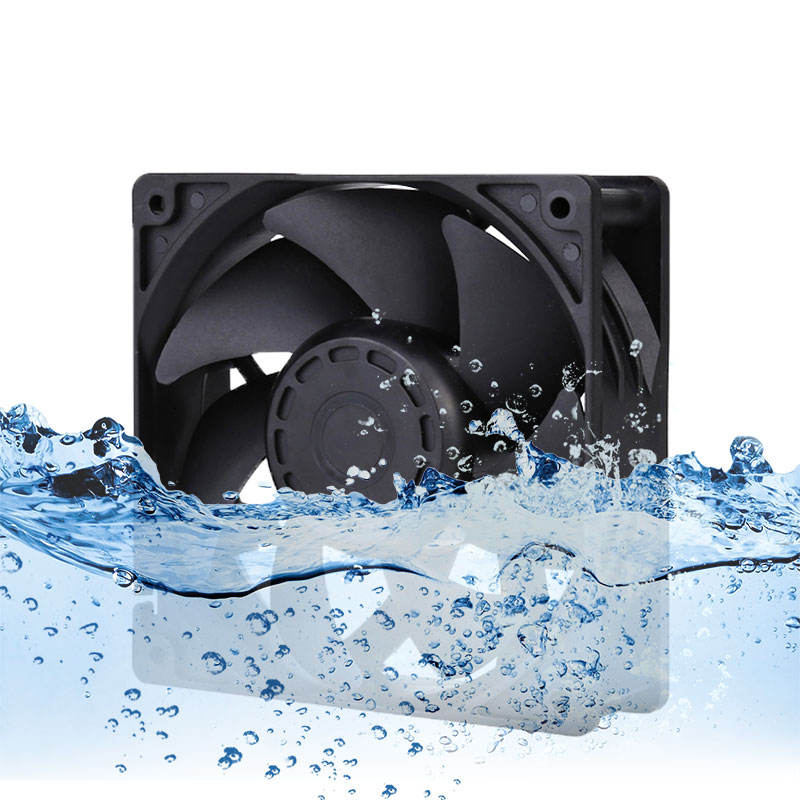
Waterproof/Dustproof Fans: High IP rating for harsh environments
Drawbacks: Reduced airflow; costly
Silent Fans: Optimized blades/motors for noise reduction
Drawbacks: Trade-off between silence and airflow
Purchasing Guide
- Household Use:
Recommend: Air circulators (balanced cooling) or DC stand fans (quiet & efficient)
Avoid: Cheap tower fans (dust-prone) and non-branded evaporative coolers
- Industrial Use:
Recommend: Axial fans (high airflow) or centrifugal fans (high-pressure dust removal)
Special Cases: Explosion-proof models for hazardous areas; high-temperature motors for extreme heat
Small Spaces:mini axial fan, Small blower fan,centrifugal blower fan
- Special Needs:
Families with Children: Bladeless fans (safety + gentle airflow)
AC Pairing: Circulators (enhance cooling distribution)
CG Fan specializes in developing and providing cooling system solutions, offering enterprises intelligent, energy-saving, and high-tech products. So far, CG Fan has obtained 12 patents. Visit our website //www.rdfans.com/ for more information.
Waterproof Cooling Fans
What Does CFM Mean for Fans